

This International Women's Day, awareness isn't enough. Prioritization needs to come next.
Health has become cultural currency. Now equality will be shaped by how institutions prioritize women’s health and financial power, writes Allison Worldwide global CEO Wendy Lund.
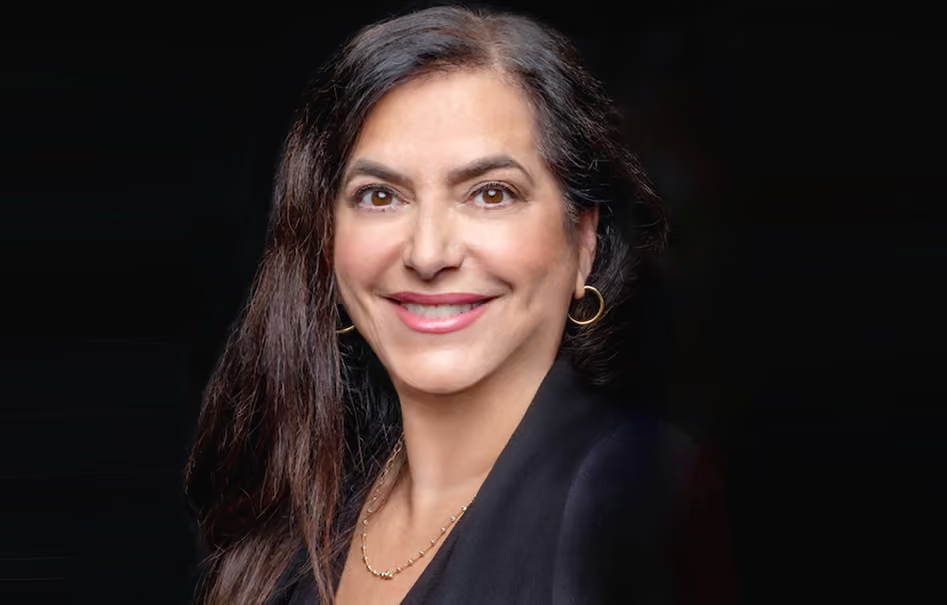
by Wendy Lund, Allison Worldwide
For years, gender equality conversations have focused on representation: more women in leadership, more women visible in culture and more seats at the table.
That progress matters, but representation without prioritization is fragile.
If equality is going to accelerate, the conversation must shift from visibility to investment, specifically in two areas that determine long-term outcomes: women’s health and women’s financial security. Both remain fundamentally underprioritized.
The economic consequences are measurable. Only 27% of women say they feel comfortable affording a family, compared to 43% of men, according to a Harris Poll survey with The Guardian. Only 48% of women expect their personal wealth to grow over the next four years, compared to 58% of men, according to Mintel. These gaps aren’t abstract; they shape women’s decisions about careers, caregiving and, frankly, long-term security.
Women live longer than men yet spend more years in poor health. Major conditions disproportionately affecting women — from cardiovascular disease to autoimmune disorders to neurological-related impacts — have historically been under-researched and underfunded relative to their scale.
Reproductive health access continues to shape economic mobility, workforce participation and long-term financial stability. The last few years have had a massive impact on maternal health and infant mortality, affecting the long-term viability of our families, communities and society.
At the same time, persistent wealth gaps, caregiving burdens and career interruptions continue to alter women’s financial trajectories in ways that compound over time. These are not personal challenges; they are economic infrastructure issues.
When women’s health is deprioritized, workforce participation declines and healthcare costs rise. When women lack financial stability, economic resilience weakens and growth slows. Yet too often, these topics are framed as individual responsibility rather than institutional design.
In the past two years, health has moved from the margins of medicine into the center of culture. Most recently, healthcare brands stepped onto the Super Bowl stage, signaling that health conversations no longer belong behind closed doors. That moment signaled a point for introspection to reduce stigma and reframe health as a shared societal conversation.
Employers should examine whether their benefits reflect the realities of women’s health across all life stages, from reproductive care, cancer screening and treatment to mental health, menopause and cardiovascular risk.
The business case is undeniable. Investors must recognize that women’s health innovation represents one of the largest untapped growth opportunities in global healthcare. Leaders must acknowledge that financial security, including access to wealth-building, flexible work structures and caregiving support, is not an optional add-on to equality. It is foundational.
Women drive most healthcare decisions and influence trillions in spending globally. They are central to workforce stability and economic growth. Prioritizing women is not a social initiative; it is a strategic business imperative.
Progress for women doesn’t happen in silence. It happens when we talk about real issues and when our institutions respond accordingly.
This International Women’s Day should be more than a moment of awareness. It should mark a significant shift toward prioritization.
If we want change, it starts with talking, listening and then acting. That means funding the research women have long needed, designing benefits around real lives and real caregiving responsibilities, expanding access where it’s still out of reach and building policies that reflect how women are protected, live and can prosper throughout the world.
Prioritization isn’t symbolic; it’s structural – and it’s overdue. That’s what it means to move from conversation to change.
Article Link: https://www.prweek.com/article/1950695/international-womens-day-awareness-isnt-enough-prioritization-needs-next
Wendy Lund is global CEO of Allison Worldwide.